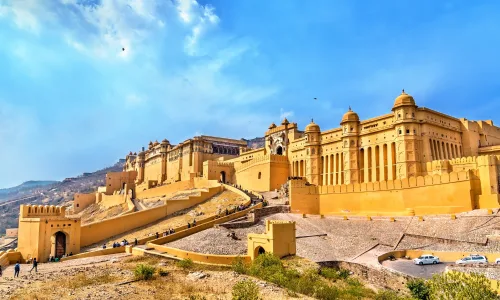
Introduction to Amer Fort Jaipur
Amer Fort, also known as Amber Fort, is one of the most iconic historical monuments of India. Located about 11 kilometers from Jaipur city in Rajasthan, Amer Fort is a UNESCO-recognized heritage site and a major part of the famous Golden Triangle Tour of India (Delhi–Agra–Jaipur).
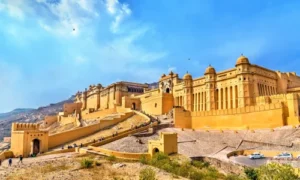
Perched majestically on the Aravalli Hills and overlooking Maota Lake, Amer Fort is a perfect blend of Rajput and Mughal architecture. With its massive fortifications, grand courtyards, stunning palaces, and intricate mirror work, Amer Fort Jaipur attracts millions of tourists from India and around the world every year.
Amer Fort Jaipur Timings
Knowing the correct visiting hours is important to plan your trip smoothly.
Day Visit Timings
- Opening Time: 8:00 AM
- Closing Time: 5:30 PM
- Best Time for Sightseeing: 8:00 AM to 11:00 AM (pleasant weather and fewer crowds)
Amer Fort Light and Sound Show Timings
- English Show:
- October to February: 6:30 PM
- March to September: 7:30 PM
- Hindi Show:
- October to February: 7:30 PM
- March to September: 8:30 PM
Amer Fort Jaipur Entry Fee
Entry Fee for Indian Tourists
- Adults: ₹100
- Students (with valid ID): ₹20
Entry Fee for Foreign Tourists
- Adults: ₹500
- Students: ₹100
Entry Fee for Light and Sound Show
- Indian Visitors: ₹295
- Foreign Visitors: ₹395
Camera Charges
- Still Camera: Free
- Video Camera: ₹200
History of Amer Fort Jaipur
The history of Amer Fort Jaipur dates back over 400 years and is deeply connected with the legacy of the Kachwaha Rajput dynasty.
Foundation of Amer Fort
Amer Fort was originally built in 1592 AD by Raja Man Singh I, one of the most trusted generals of Mughal Emperor Akbar. Raja Man Singh chose this strategic location due to its natural defenses provided by hills and water bodies.
Later, successive rulers like Mirza Raja Jai Singh I expanded and enhanced the fort, adding palaces, temples, and gardens.
Capital Before Jaipur
Before the establishment of Jaipur city in 1727 by Maharaja Sawai Jai Singh II, Amer served as the capital of the Kachwaha rulers. Amer Fort remained the royal residence for generations until Jaipur was built as a planned city.
Mughal Influence
Due to strong political and marital alliances with the Mughal Empire, Amer Fort architecture reflects a harmonious blend of Rajput strength and Mughal elegance. Decorative arches, marble inlays, and mirror work showcase this cultural fusion.
Architectural Marvel of Amer Fort Jaipur
Amer Fort is constructed primarily using red sandstone and white marble, giving it a royal and timeless appearance.
Key Architectural Highlights
1. Suraj Pol and Chand Pol
- Suraj Pol (Sun Gate) – used by kings and nobles
- Chand Pol (Moon Gate) – commonly used by visitors
2. Jaleb Chowk
A grand courtyard where royal armies gathered after victories. It leads to the main palace complex.
3. Ganesh Pol
One of the most photographed gates in Jaipur, decorated with frescoes and paintings of Lord Ganesh.
4. Diwan-e-Aam (Hall of Public Audience)
This hall features elegant columns and was used by kings to meet common people and hear grievances.
5. Diwan-e-Khas (Hall of Private Audience)
Reserved for confidential meetings with ministers and dignitaries.
6. Sheesh Mahal (Mirror Palace)
The crown jewel of Amer Fort. Thousands of tiny mirrors reflect light beautifully, illuminating the entire hall with just one candle.
Amer Fort Elephant Ride Experience
One of the most popular attractions at Amer Fort Jaipur is the elephant ride, which takes visitors from the base of the hill to the main entrance.
- Timing: 8:00 AM to 11:00 AM
- Cost: ₹1,100 to ₹1,500 per elephant (up to 2 people)